Is It Bid’ah To Recite Parts From The Qur’an After ‘Asr Prayer?
Is it bid’ah to recite parts from the Qur’an after ‘asr prayer?
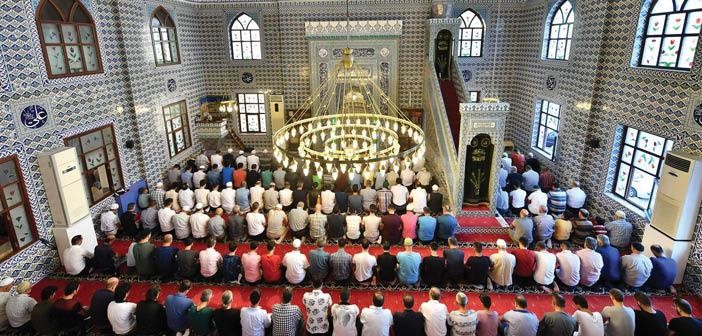
It is sunnah not to leave the place we established prayer and to continue with dhikr and tasbihat for a while after completing prayer unless there is an excuse. The Prophet Muhammad (saw) encouraged people to do so after prayers and gave the glad tidings that angels continue to pray the person as long as he does not leave the place where he established prayer (Bukhari, Salat, 87; Muslim, Masajid, 272). On the other hand, Prophet Muhammad (saw) advised to recite the last three verses of Surah al-Hashr after fajr prayer and to recite the last two verses of Surah al-Baqarah at nights (Bukhari, Fadhail al-Qur’an, 10; Tirmidhi, Fadhail al-Qur’an, 22).
Except for fajr prayer, there is no specific part or surah of the Qur’an advised by Prophet Muhammad (saw) to be recited after prayers. However, the fact that it is stated in the Holy Qur’an, “When ye pass (congregational) prayers, celebrate Allah’s praises, standing, sitting down, or lying down on your sides,” (Nisa, 4/103) shows that there is no limit on this subject, and dhikr and tasbihat are not special to certain times or prayers. The essential point in the qiraat, dhikr, and tasbihat that are performed outside prayers is that they are performed individually by everyone. This was the practice in the period of Prophet Muhammad (saw). However, performance of tasbihat collectively under the leadership of muazzin and recitation of the “ashr” (certain parts of the Qur’an) have become widespread in some countries, and have been passed down until today.
Accordingly, although there is no narrative about recitation of a part from the Qur’an after ‘asr prayer, in the light of the verses and hadiths above, it can be said that it is permissible to recite the Qur’an on condition that a person does not believe that it is an obligation prescribed by religion.
Source: Presidency Of Religious Affairs The Turkey, High Board of Religious Affairs FATWAS